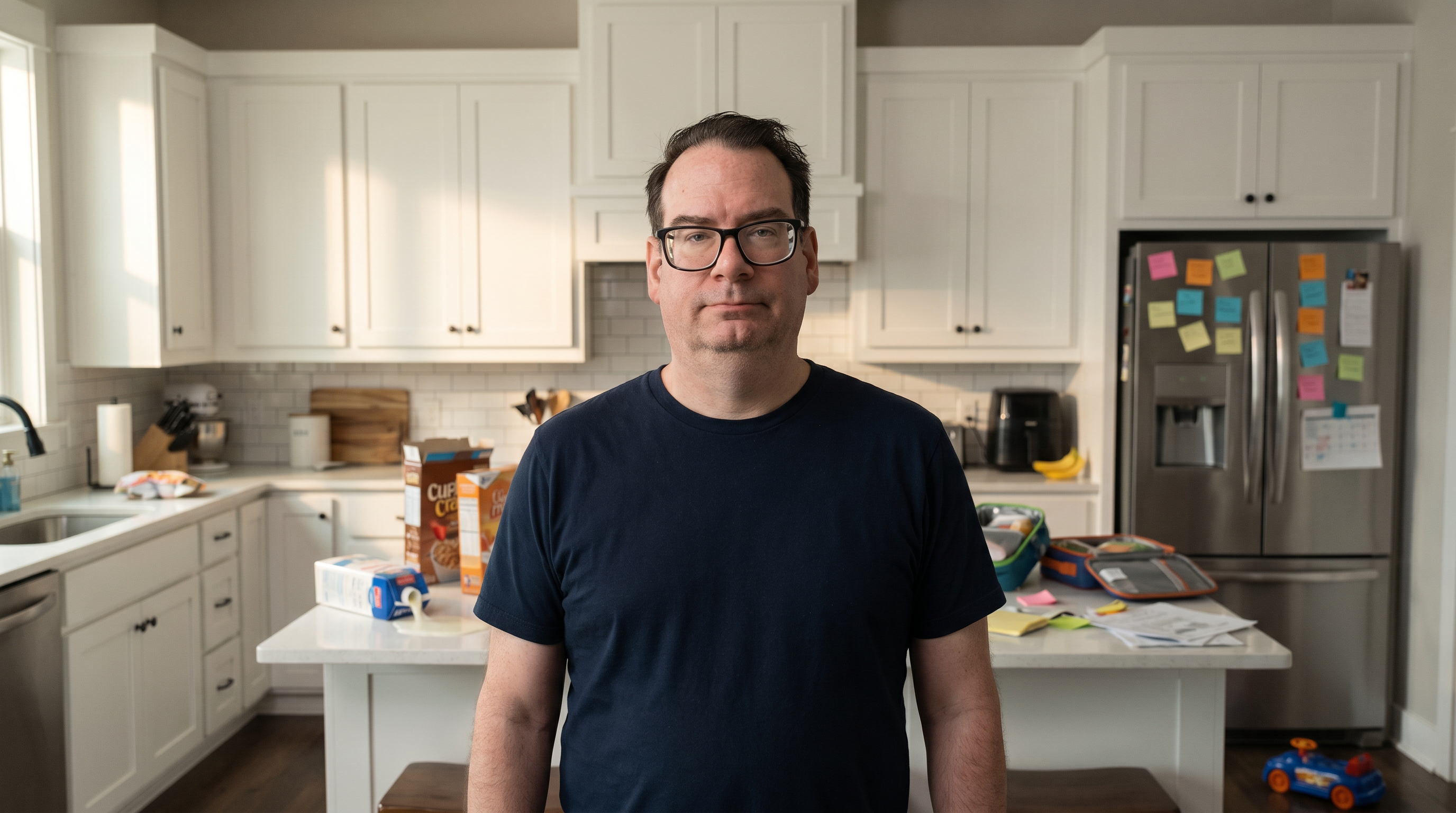
The Story Behind Housebound Husband: How Our Family Routines Changed My Life
The Story Behind Housebound Husband
The night I realized I was housebound
I didn’t become a “housebound husband” overnight.
It happened slowly, over years, until one night I was sitting in my home office listening to my oldest son wail in the room above me and I finally said the quiet part out loud: “I don’t really leave the house anymore.”
That sound—his wailing—is a stim from his autism, but it carries through the walls and you can hear it outside.
In that moment, with my wife on the other side of the world in Taiwan for a week teaching a course and me home with the kids and the dogs, it hit me: this isn’t just a season.
This is my life.
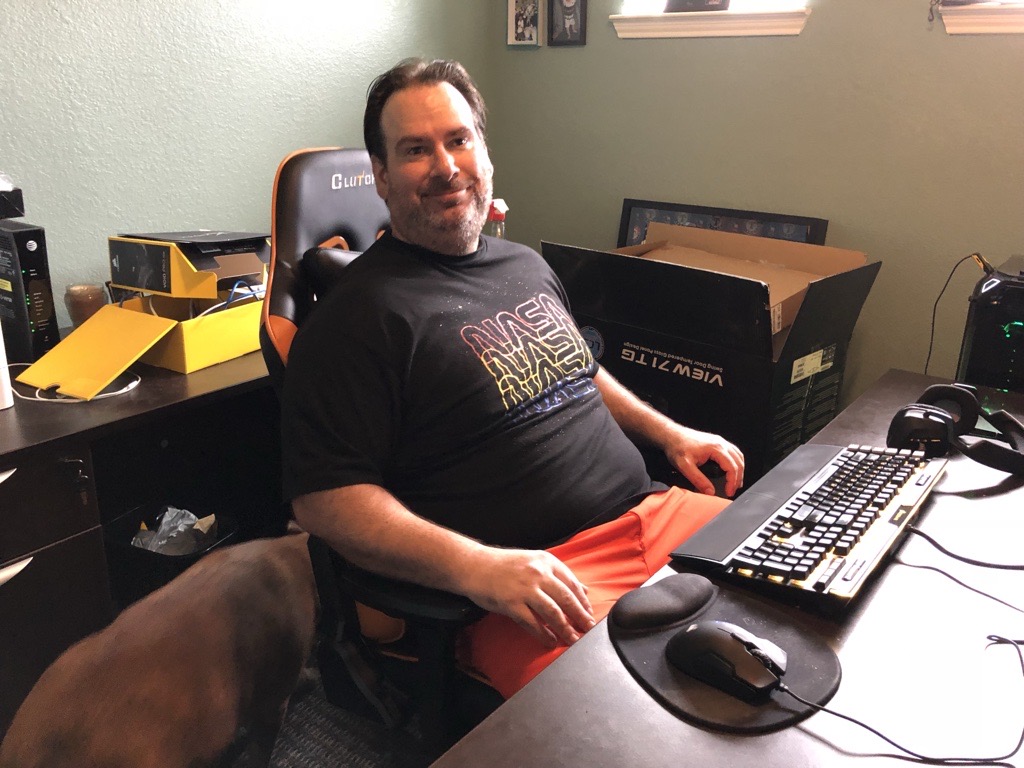
Our first son and the reality of autism
The idea of Housebound Husband really started years earlier, when my wife and I had our first son.
He was diagnosed with autism at a young age, and we quickly learned how many misconceptions people have about what that actually means.
There’s this idea that all kids with autism act the same, or that you can neatly sort them into “functioning” and “non‑functioning.”
That could not be further from the truth.
Every autistic person has a unique mix of strengths and challenges, and our son was no exception.
He didn’t start using words until after he turned two.
Even then, it was single words—not complex thoughts and feelings.
He never really became fully potty trained.
He couldn’t clearly express his needs and wants, just raw emotions.
And when those emotions came out, they were big.
Becoming “the one who stays home”
My wife is a professor of economics at a local university, and her career although flexible does have an in person requirement.
After our son turned two, I took a remote job so I could be around the house to help with the day‑to‑day challenges.
We weren’t homebodies before this.
We liked going out, being social, doing normal couple things.
But with our son’s needs, not having a go‑to sitter, and family not always being a reliable option, our world started to shrink.
It wasn’t like anyone told me, “You must stay home now.”
There was no dramatic moment.
It just gradually became easier to be home than to go anywhere.
And over time, I started slipping into the my alter ego "the housebound husband".
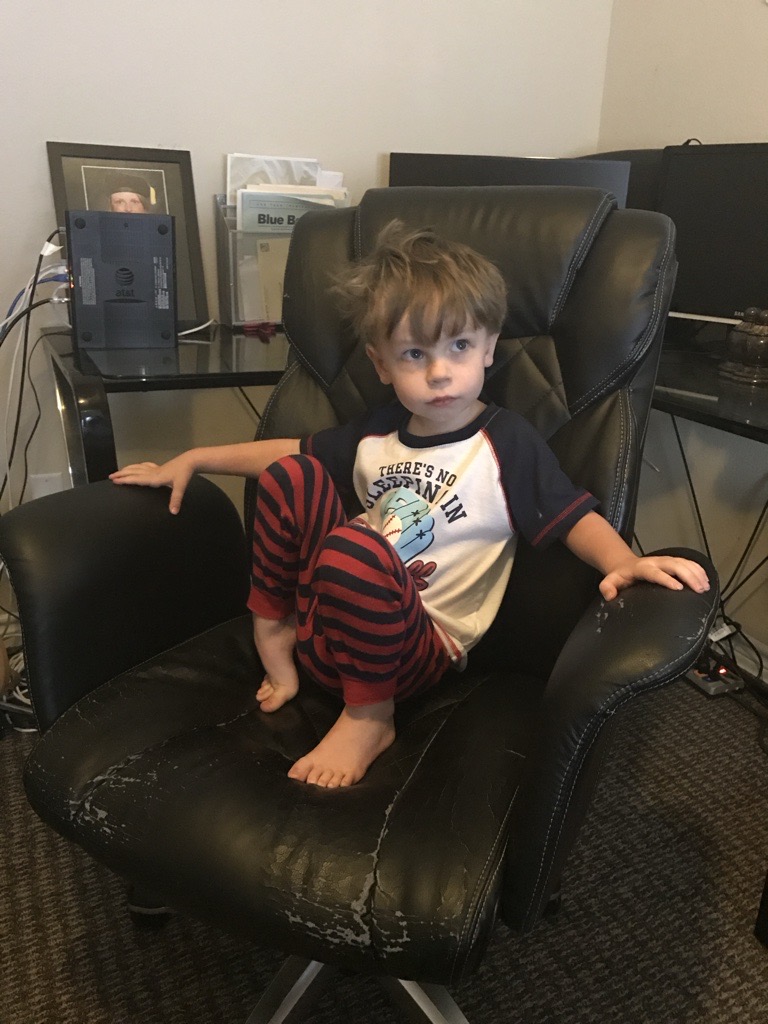
When social life quietly disappeared
People talk about losing touch with friends after kids, but this was different.
Our son’s outbursts got louder and longer as he got older, not easier.
That limited what we could do and where we could go even more.
We kept hoping things would “click” one day and there would be a clear path for him to become a more independent, “productive” person in the way the world usually defines it.
That path never really appeared.
So instead of our life expanding as he grew, our radius kept getting smaller.
The joys of being social—spontaneous dinners, traveling together, saying yes to invitations—slowly disappeared.
It was just simpler to stay home.
Our second son and a new contrast
In 2019, we had our second son.
He’s the prototypical little boy with zero signs of autism.
Suddenly we were parenting two completely different kids with completely different needs.
By then, six years had passed since our first son was born and we faced a whole new set of challenges that added to the chaos inside these four walls.
The world kept moving forward, but being home seemed to be the safe and comfortable way to deal with our ever changing world.
COVID: the nail in the coffin
Then COVID hit.
If I was already staying home more because of our oldest son, the pandemic was the proverbial nail in the coffin.
Now it wasn’t just autism limiting our movement; it was a global pandemic.
Everyone got a taste of what “housebound” feels like, but for us, it stacked on top of years of already living that way.
While other people slowly returned to normal, our normal stayed…complicated.
The routines, the meltdowns, the noise, the constraints—they didn’t end when lockdowns did.
This is really where Housebound Husband was born, even if I didn’t have the name yet.
The moment I finally named it
Fast forward to today.
As I’m writing this, my oldest son is wailing in his room directly above my office.
It’s that same stim you can hear from outside the house.
He still isn’t fully potty trained, although we’ve made real progress in specific areas.
We’ve put in years of work, and he has made gains, but the day‑to‑day reality is still intense.
Earlier this year, my wife traveled to Taiwan to teach a course.
I was home alone with the kids and the dogs, running the house, holding all the routines together.
At some point during that trip, it hit me:
“I am a housebound husband. That’s what I am. And maybe that doesn’t have to be a bad thing.”
Once I named it, I could start to embrace it.
What started as a few notes and tips from a housebound husband has grown into something bigger.
What Housebound Husband means today
Housebound Husband is my way of telling the truth about what life actually looks like inside our home.
It’s about autism, marriage, family routines, money, and the thousand tiny decisions that keep the whole thing from falling apart.
It’s not a pity party and it’s not a highlight reel.
It’s the space where I share the real stories, the systems I’m building, the things that break, and the things that help.
It’s for other dads who find themselves more at home than out in the world, and for the partners who love them but don’t always see what’s happening in the background.
I’m still housebound in a lot of ways.
But now, instead of hiding from that reality, I’m building from it.
This blog is where I put those lessons down, one story at a time.
Next up: how our mornings actually work when autism, school, and work all collide.